

.webp)
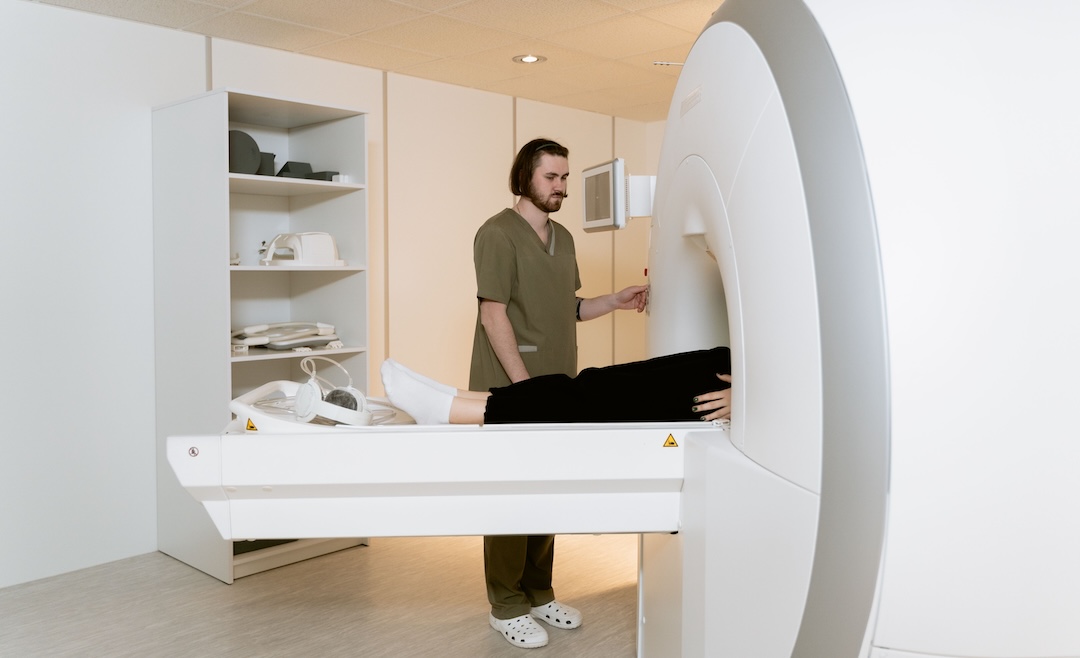
A radiology tech, also called a radiologic technologist, is a healthcare professional trained to operate imaging equipment like X-ray machines, mammogram machines, and CT scanners. The images radiology techs capture help doctors diagnose and treat patients.
This is a great career to consider because the need for radiology techs is rising. The U.S. Bureau of Labor Statistics (BLS) predicts a 5% job growth rate for radiologic and MRI techs from 2024 to 2034. That is faster than the 3% average for all jobs across the nation.
Besides being in demand, this is a well-paying job that does not require a four-year degree. Most radiology tech programs take about two years to complete, and rad tech certification can open doors to more specialized, higher-paying roles down the road.
This guide goes over everything you need to know about a career as a radiology tech. We’ll cover what they do day to day, where they work, the skills needed, schedule and pay, and how to get started in this great career.
What Is a Radiology Technologist?
Diagnostic imaging is needed for many major medical conditions, from fractures and internal injuries to cancer, cardiac disease, and neurological disorders.
A radiologic technologist is the licensed healthcare professional who performs the diagnostic imaging ordered by physicians. The tech is trained on how to position the patient and operate the equipment to get the exact images the doctor needs.
Rad techs acquire the images and evaluate their technical quality, but they generally do not interpret the results or diagnose patients. That job belongs to a radiologist, a physician who reviews the scans and reports findings back to the patient's care team.
You may see this job called a radiology tech, radiologic technologist, radiology technician, or rad tech. Some overlap exists with more specialized imaging roles, like MRI techs and CT techs, who do additional training so they can operate specific equipment.
That kind of career mobility is one of the best aspects of this job since there are growth opportunities that don’t require you to go back for a four-year degree. And because there are fewer people with those specialized skills, there’s an even greater demand for them.
In 2024, there were more than 228,000 radiologic technologists and about 44,000 MRI technologists working in the U.S. That makes it one of the largest allied health professions in the country.
What Does a Radiology Tech Do?
A radiology tech's day blends technical work with direct patient care. Duties generally fall into three categories: diagnostic imaging, patient care, and administrative tasks.
Diagnostic Imaging Duties
This is the heart of the job. Radiology techs are responsible for capturing clear, accurate images that give physicians what they need to make a diagnosis.
Radiology techs:
- Adjust and maintain imaging equipment
- Follow physician orders on which areas of the body to image
- Position patients and equipment to get the correct view
- Operate computerized imaging equipment to take scans
- Evaluate image quality and repeat scans when necessary
- Apply radiation protection to limit exposure for patients and staff
Patient Care Duties
While this seems like a technology-focused job, techs spend much of their shift face-to-face with patients. Sometimes patients are there for routine screenings, but other times, they may be anxious or in pain. So, this part of the job is just as important as technical skill.
Radiology techs:
- Explain procedures and answer patient questions
- Take a brief medical history before each exam
- Help patients into position, including those with limited mobility
- Ease anxiety and keep patients comfortable during scans
- Watch for signs of distress or allergic reaction to the contrast dye used for some imaging processes
Administrative and Technical Duties
Beyond imaging and patient care, radiology techs handle administrative and technical duties that keep imaging departments running smoothly.
Radiology techs:
- Keep detailed, accurate patient records
- Track equipment maintenance and report malfunctions
- Follow safety and infection control protocols
- Work with radiologists and referring physicians to determine whether additional images need to be taken
Where Do Radiology Techs Work?
Most radiology techs work in hospitals, but they also work in other settings. Work environments can determine your schedule, the kind of imaging you do, and the pace of your day.
Here are some of the most common places rad techs work:
- Hospitals: Hospitals run on shift work. This means you may need to work evenings, weekends, or holidays. The pace will depend on your department. Emergency and trauma imaging will be more fast-paced than imaging related to oncology.
- Outpatient imaging centers: These locations offer more predictable hours with a steady stream of scheduled exams, from X-rays to MRIs.
- Physicians’ offices: Working for a physician practice usually means you are focused on a specialty like orthopedics or oncology. These offices have predictable hours and see fewer patients overall.
- Urgent care and trauma centers: Like hospital emergency departments, the pace here will be more intense to support fast diagnosis and treatment decisions.
Skills and Qualities of a Successful Radiology Tech
Radiology techs need a mix of technical know-how and people skills to do the job well. Core skills and qualities include:
- Being detail-oriented: Techs must follow precise instructions from physicians on settings and patient positioning to get the best image quality for diagnosis.
- Being calm and compassionate: Putting nervous or injured patients at ease is part of the daily routine.
- Having physical stamina: The job involves standing for long periods and frequently helping move or lift patients.
- Being technically savvy: Operating complex imaging machinery requires comfort with technology.
- Having math skills: Techs must calculate proper radiation doses and exposure settings for each exam.
- Being a good communicator: Giving patients clear instructions helps them cooperate better during exams, which affects image quality.
Radiology Tech Requirements and Certification
Most states require radiology technologists to hold a professional license in addition to certification before they can practice.
Education Requirements
Radiologic technology training has two components. The first is academic coursework, and the second is hands-on clinical training. Both are equally important and required for certification.
- Associate degree: To be eligible for certification, you need at least an associate degree. Your degree does not have to be in radiological sciences, but it is possible to do an associate degree program that trains you for certification.
- Academic coursework: Coursework covers anatomy, medical terminology, radiation physics, patient care, imaging procedures, and more.
- In-person clinical hours: Clinical hours are spent performing diagnostic imaging procedures at a hospital or imaging center.
Check out Stepful's Online Radiology Tech Program if you’re interested in becoming a certified radiologic technologist.
Certification Requirements
The American Registry of Radiologic Technologists (ARRT) is the primary credentialing body for the field. It offers several credential types depending on your career stage.
- Magnetic Resonance Imaging Assistant, I.A.(MR): This newer entry-level credential is designed for professionals who support MRI departments without independently performing scans. Candidates need a high school diploma or GED, structured education, documented clinical competencies, and a passing exam score.
- Registered Technologist (RT): This is the credential that most employers and states require for practicing radiology techs. It requires an associate degree and completion of an accredited program.
- RT specialty credentials: For those who already have an RT, ARRT offers 14 credentials that are specific to certain technologies or procedures like MRI, CT, and radiation therapy.
- Registered Radiologist Assistant (RRA): This is ARRT's highest-level credential for this field. It requires an RT credential, a master's degree, completion of an approved radiologist assistant program, and qualifying experience. It allows techs to take on advanced duties under a radiologist's supervision.
Once certified, rad techs must renew their credential annually, which requires completing continuing education credits. This keeps techs current on equipment, safety standards, and best practices.
License Requirements
More than 75% of states have their own licensing laws for radiologic technology. In those states, you need a state license before you can work. This is a separate process from certification.
Even though certification and licensing are distinct, they often go hand-in-hand. For example:
- In some states, you must get your ARRT certification before applying for a license.
- Some states actually use your ARRT exam score or credential when deciding whether to license you.
- In states that require licensing, ARRT often administers the actual licensing exam on the state's behalf.
Because requirements vary so much, you’ll need to check your state’s specific rules before you start training.
How to Become a Radiology Tech
Becoming a radiology tech follows a fairly predictable path. How long it takes depends on the path you choose, but most people need two to four years if you don’t already have an associate degree.
Here's what it typically looks like from start to finish:
Step 1: Earn an associate degree or higher
- To be eligible for certification and licensing, you need an associate degree.
- If you have already completed an associate degree before you start training, it does not have to be in radiological sciences. Check the training program you choose for their specific educational requirements.
- If you do not have an associate degree yet, you can choose a program that also prepares you for certification. In this case, you’ll want to choose a program that is approved by ARRT in order to be eligible to take their certification exam.
Step 2: Enroll in an accredited radiologic technology program
- To be eligible for certification and licensing, you must complete an educational program that includes academic coursework and clinical practice. Note that if your associate degree is in radiological sciences or something related, you may already meet this requirement.
- You can use ARRT’s resources to find accredited programs in your state.
- Programs typically run 20 to 24 months for both the classroom and clinical segments.
Stepful's Online Radiology Tech Program provides twice-weekly, live online sessions with expert instructors. Having a structured class schedule and a peer group helps students stay engaged and moving toward their goal. Our schedules are designed to be flexible for working adults.
Step 3: Complete clinical training hours
- Clinical hours take place in a real hospital or imaging center, where you'll practice positioning patients and operating equipment under supervision.
- This in-person skills-building is required as part of most training programs and is required to take the ARRT certification exam.
Step 4: Pass the ARRT certification exam
- After finishing your training program, you'll take ARRT's national certification exam.
- The exam tests your knowledge of anatomy, patient care, radiation protection, and imaging procedures.
- Passing it earns you the Registered Technologist (RT) credential most states and employers require.
Step 5: Obtain state licensure where required
- Most states require a separate license on top of ARRT certification.
- Some states actually use your ARRT exam score or credential for licensing.
- If your state requires a separate license, you’ll need to apply, pay a fee, and obtain the license before you begin working.
Check your state’s specific regulations to confirm what's needed before you apply for your license.
Radiology Tech Salary and Job Outlook
The most recent data shows that radiologic technologists and technicians made an average salary of $83,840 per year or $40.31 per hour, as of May 2025. Of course, pay varies depending on location, employer, experience level, and other factors.
For example, the lowest-paid 10% of rad techs earned a median salary of $55,980 a year, while the highest-paid 10% earned a median of over $118,000.
In terms of geography, California topped the list, with an average salary of $121,260. Massachusetts, DC, Oregon, and Washington were reported as the next highest-paying states/districts.
Techs with additional credentials, like those who work as MRI techs, also made more money. In fact, the median annual salary reported in 2024 for MRI techs working in outpatient centers was $128,290.
In terms of employers, the BLS data showed that radiology techs who worked for the federal government made the highest salaries, followed by those who worked at outpatient centers, hospitals, and diagnostic labs. Physicians’ offices paid the least.
Not only is the pay for this job very good, but the demand is strong. The BLS projects a 5% job growth rate for radiologic and MRI technologists from 2024 to 2034. That is faster than the 3% average they predict for all occupations.
This translates into about 15,400 job openings each year. The BLS credits this growth to the aging population of the country. Older adults need more healthcare services in general, but they also commonly have falls and other injuries that need imaging for diagnosis.
Radiology Technologist vs. Radiologist
Radiology technologist and radiologist are titles that are often confused, but they describe very different jobs.
- A radiology technologist performs the imaging exam by positioning the patient and capturing the images.
- A radiologist is a physician who interprets the images in order to diagnose the patient's condition.
The education paths are also very different. Radiologists complete around 13 years of training, including medical school, residency, and often a fellowship.
Radiology technologists complete an associate degree, a training program, certification, and licensing, which typically takes around two years.
Radiology Tech FAQs
Is radiology tech a hard career to get into?
Compared to many healthcare careers, becoming a radiology tech is fairly easy. It requires an associate degree rather than a 4-year degree or more. Training programs take less than two years and accept students without prior healthcare experience.
Is radiology tech a good career?
Yes. The field offers competitive pay, strong job growth, and opportunities for career advancement. It also provides a nice balance of patient interaction and technical work.
Do I need prior healthcare experience?
No. Radiology technology programs teach anatomy, patient care, and imaging fundamentals from the ground up, so no prior healthcare background is required.
How long does it take to become a radiology tech?
Most accredited training programs take about 20 to 24 months to complete. They include academic coursework and clinical training hours. After training, certification, and licensing happen fairly quickly.
What's the difference between a radiology tech and a radiologist?
A radiology tech performs the imaging exam. A radiologist is a physician who reads the images and diagnoses the patient. Radiology techs spend two to four years preparing for their job, whereas radiologists may train for 13 years or more.
What certifications do radiology techs need?
Most rad techs need an ARRT Registered Technologist (RT) credential, plus a state license in most states.
What is the job outlook for radiology techs?
The job outlook is strong. The BLS projects 5% job growth for radiologic and MRI technologists from 2024 to 2034, faster than the average for all occupations, with about 15,400 openings expected each year.
Do radiology techs work nights and weekends?
It depends on the setting. Hospital-based rad techs often work evenings, weekends, or overnight shifts since imaging is sometimes needed in emergencies. In contrast, techs in outpatient centers and physicians' offices tend to have more predictable daytime hours.


.svg)


