
Stepful's online program prepares you to become a certified home health aide. After you complete your coursework and hands-on skills practice, you will earn your HHA certification. Then, our one-on-one career coaching team will work with you to find a full-time job.
%202.svg)

%201.svg)




%201.svg)
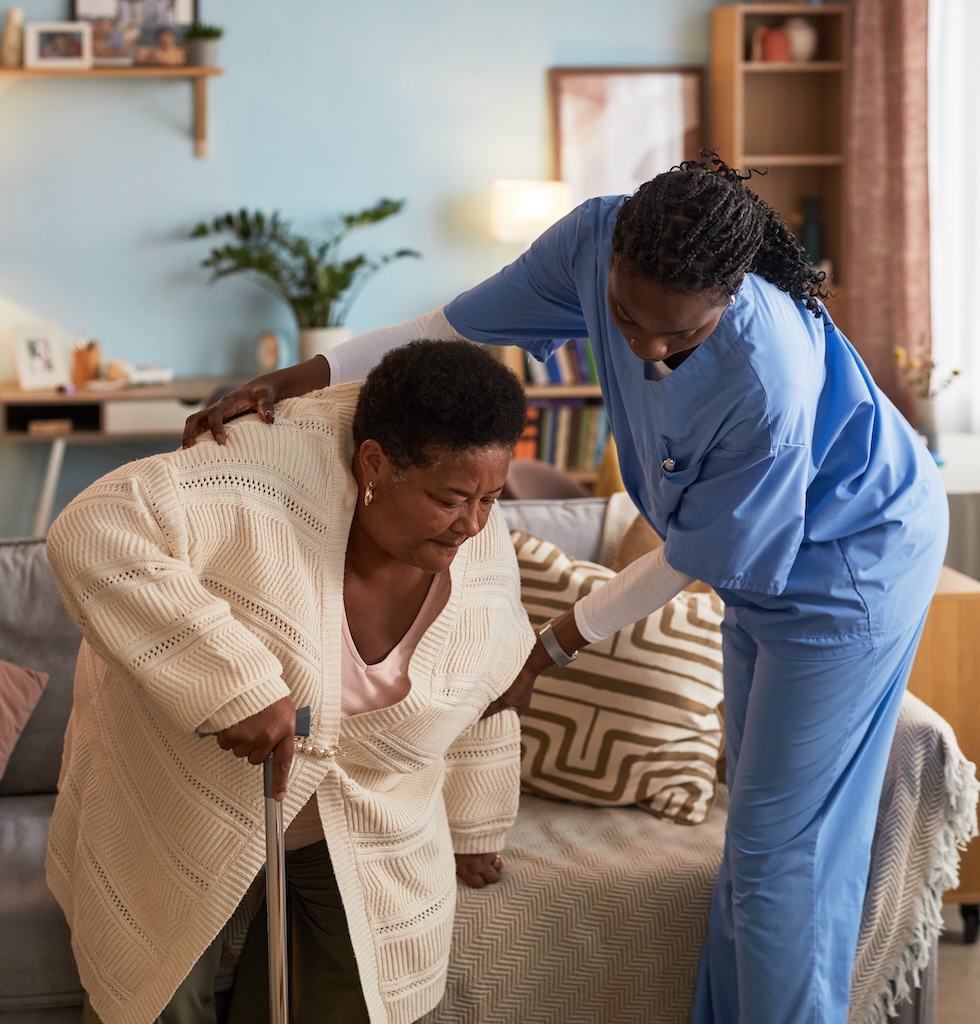
Home health aides (HHAs) are trained caregivers who help people with daily living activities in a home or community setting. Their clients are typically elderly adults, people with disabilities, or patients recovering from illness or surgery. HHAs help their clients stay safe, healthy, and comfortable in familiar surroundings.
Home health aides cover a wide range of responsibilities. They assist with personal care (bathing, dressing, grooming), health monitoring (checking vital signs, observing changes in condition), household tasks (meal prep, light housekeeping), and transportation to appointments.
But perhaps the most important part of the job is companionship. Many clients are isolated, and the relationship they build with their home health aide matters deeply to their quality of life.
HHAs work under the supervision of a registered nurse or other healthcare professional, but they typically operate independently once they're in a client's home. That requires good judgment, strong communication skills, and genuine compassion.
According to the U.S. Bureau of Labor Statistics (BLS), home health aide is one of the fastest-growing occupations in the country. Demand is being driven by an aging population and a national shift toward aging-in-place care, helping seniors stay home rather than moving into institutional settings.
Home health aides show up for their clients every day. Whether they're working in a private home (such as hospice care), an assisted living community, or a group home, their job is to help clients live safely, comfortably, and with dignity.
Here are some of the tasks they are likely to do:

Personal care:
- Assisting clients with bathing, grooming, dressing, and toileting
- Supporting mobility: helping clients move safely, use assistive devices, or transfer between bed and chair
- Preparing nutritious meals and assisting with feeding when needed
Health monitoring:
- Taking and recording vital signs, such as blood pressure, pulse, temperature, and respiration
- Reminding clients to take medications as prescribed; (HHAs cannot administer medications in most states, though some states allow it with supervision)
- Observing and reporting changes in a client's physical or mental condition to the supervising nurse
Household support:
- Light housekeeping, laundry, and errands
- Helping clients organize their schedules and plan appointments
- Accompanying clients to medical appointments and outings
- Maintaining accurate care logs and documentation

Stepful's online HHA program is designed to help you build these skills, earn your HHA certification, and take your first step into a healthcare career.
Home health aides are in demand, make a decent salary, and have many opportunities for career growth. This job is one of the most human-centered roles in all of healthcare. It requires in-person presence, empathy, and judgment. As such, it is not at risk of automation or offshoring.
Salary
According to the BLS, the median annual wage for home health and personal care aides is $34,900, or about $16.78 per hour. The top 10% earn more than $44,190 per year.
Pay varies by state, employer type (agency vs. private duty), and experience. Those who work in residential intellectual and developmental disability facilities earn more on average.
Job outlook
There are currently about 4.35 million home health and personal care aides employed across the U.S., making it one of the largest occupational categories in all of healthcare.
The BLS projects a 17% job growth rate in the next decade, a much faster rate than the average for all occupations (3%). They expect approximately 765,800 job openings each year through 2034.
Career Ladder
Many people become home health aides as a first step into a broader healthcare career. They often go on to become Certified Nursing Assistants (CNAs) or nurses, like LPNs or RNs, with further education. The patient care experience and interpersonal skills you build as an HHA transfer directly up the career ladder.

01
Choose a training program
The first step toward becoming a home health aide is enrolling in a training program approved by your state.
These programs cover core skills like personal hygiene assistance, reading vital signs, infection control, basic nutrition, and emergency response. Home health agencies that accept Medicare or Medicaid require at least 75 hours of training, including 16 hours of clinical instruction, while state-licensed agencies typically require a minimum of 40 hours.
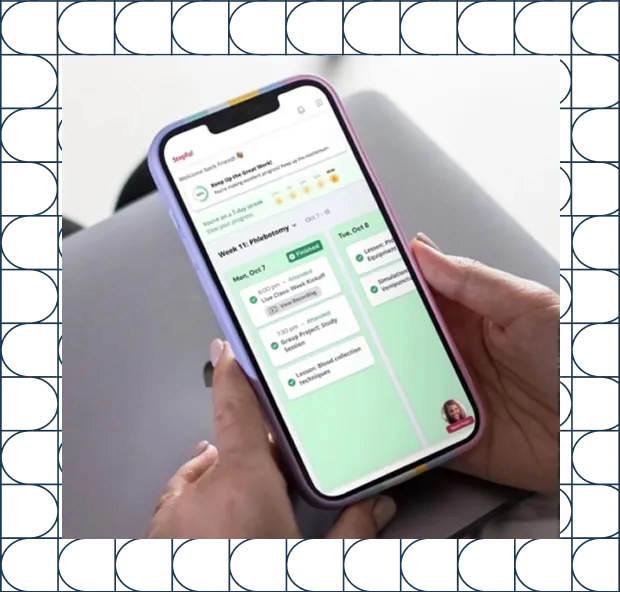
Stepful's program offers 100% online home health aide courses with live instructors, making it easy to complete your training on a schedule that works for you.
02
Demonstrate your skills in-person
After completing your coursework, you'll need to pass a hands-on competency evaluation before you can work with patients.
This in-person skills assessment confirms that you can safely perform the care tasks you've learned, like assisting with mobility, monitoring vital signs, and following proper hygiene and infection-control procedures.
Stepful provides in-person evaluation and makes the process easy to arrange for working adults.
03
Test for your HHA certification
Home health aide certification requirements vary by state. In many places, becoming a certified HHA involves passing a competency exam and clearing a background check. Some states also require CPR and first aid certification.
Stepful's HHA course is designed to prepare you for certification in your state. With your training and evaluation complete, you'll be in good standing with most employers, particularly those at Medicare- and Medicaid-certified agencies.
04
Land a full-time job
With your HHA training and certification in hand, you're ready to pursue employment with home health agencies, hospice organizations, assisted living facilities, or private clients.
Stepful students don't navigate the job search alone. Our students get access to our job readiness program that includes resume building, mock interviews, and connections to healthcare employers.
Home health aide training has two required components, and both are essential.
The first is academic coursework, which covers the knowledge behind safe, effective caregiving.
The second is a hands-on skills evaluation, where you demonstrate competency in the practical tasks you'll perform with real clients.
The “classroom” portion of HHA training covers patient rights and ethics, infection control and safety, nutrition and meal preparation, principles of body mechanics, communication skills, observation and documentation, and basic health monitoring.
This foundational content is well-suited to online delivery and can often be completed on a flexible schedule.
Personal care techniques, safe patient transfers, vital signs measurement, and other hands-on competencies must typically be demonstrated in person. This is a standard requirement for HHA certification in most states.
Compared to other healthcare training programs, the hands-on component for HHA is limited in scope and relatively easy to arrange. There's no hospital placement or complex medical equipment involved.
Most programs, including Stepful’s, are designed with working adults in mind, so you can move through the training without putting your life on hold.

Not all HHA programs are the same, but the best ones cover a consistent set of core topics. If you're comparing home health aide training programs, here's what to look for:
- Role of the home health aide and scope of practice
- Patient rights, dignity, and person-centered care
- Infection control and standard precautions
- Safety and emergency procedures
- Personal care skills (bathing, grooming, dressing, toileting)
- Safe patient handling and body mechanics
- Vital signs measurement and health observation
- Nutrition, meal preparation, and special dietary needs
- Communication and documentation
- Working with clients who have dementia, disabilities, or chronic illnesses
- Certification exam preparation

Live classes, not self-paced video
%202.svg)
Built-in job coaching

Proven model, new program