.webp)

Volunteering is one of the clearest ways to show medical school admissions committees that you understand what medicine involves and that you are committed to serving others.
Strong grades and high MCAT scores matter, but schools also want proof that you have spent time serving patients and communities.
So, how many volunteer hours do you actually need to get into medical school?
Successful med school applicants have reported from 150 to well over 300 volunteer hours on their applications. Some say 500+ hours is typical for very competitive applications.
There are two categories for volunteer hours: clinical hours and non-clinical hours.
Clinical hours involve direct exposure to patients or healthcare settings. Non-clinical hours focus on service and leadership outside medicine. Both matter, but clinical experience tends to carry more weight.
This guide explains why volunteering is important for med school, how many hours are typical, examples of clinical versus non-clinical service, how to find and choose opportunities, and how these positions will strengthen your application.
How Important are Volunteer Hours on a Med School Application?
Volunteering is not just something that improves your chances of getting into medical school; it’s essential.
You have to demonstrate a real commitment to serving others in every part of your application.
The Association of American Medical Colleges (AAMC) describes service orientation as one of its core premed competencies. They encourage premed students to show a commitment to something larger than themselves and to demonstrate a dedication to “making meaningful contributions that meet the needs of communities.”
Here’s what some of the medical schools say about the importance of service and what they are looking for from applicants:
- University of California, San Francisco School of Medicine. UCSF emphasizes sustained service, community engagement, and direct exposure to patient care; competitive applicants often report 200 or more hours across settings.
- University of Michigan Medical School. Michigan highlights meaningful clinical involvement and service to underserved communities as important factors in their review of applicants. Under the attributes of a successful candidate, they talk about “devotion to the needs of others” as a critical trait.
- Florida State University College of Medicine. FSU places strong emphasis on serving underserved and rural populations, particularly within Florida. The school’s mission focuses on educating physicians who will practice compassionate patient-centered care for the communities of greatest need.
How Many Volunteer Hours Are Required for Med School?
Most medical schools do not specify a set number of volunteer hours that is required for admission. They don’t want students to view volunteering like getting a grade, where you hit the right number and then you’re in.
Instead, they want applicants to choose quality experiences that fit with their personal interests and goals.
Since schools don’t publish specific requirements, admissions consultants have based their recommendations on what has worked for past applicants.
The consensus is that 100 hours of volunteering is the minimum to get into medical school, and 300 hours is about average.
One consulting group reports that the students who got the most interviews in the last admissions cycle had 300 to 2,000 hours of combined clinical and non-clinical service hours.
Clinical Volunteer Hours vs. Non-Clinical Hours
Clinical volunteer hours involve direct exposure to patient care or healthcare environments. This can include interacting with patients, supporting clinical staff, or observing medical workflows in real time. Besides helping others, the goal of this service is to learn what patient care looks like on a daily basis.
Non-clinical volunteer hours focus on service but do not involve direct patient care. These roles still demonstrate compassion, leadership, and commitment to others. Some may be health-related but non-clinical, while others are unrelated to healthcare.
Clinical hours are especially important because they confirm that you understand the realities of healthcare. However, non-clinical service shows that your motivation to serve extends beyond resume-building and into broader community engagement.
For many students, clinical experience can also come from paid jobs. Healthcare roles that are strong for premed students and those taking a gap year include working as a medical assistant, patient care technician, EMT, or phlebotomist.
Medical assisting, in particular, is a strong choice for aspiring med school students. MAs take vital signs, prepare patients for exams, assist with procedures, and document information in electronic health records.
Working as a medical assistant can strengthen a medical school application by demonstrating a commitment to clinical work, building relationships with physicians for letters of recommendation, and providing real patient care stories for personal statements.
If this is something you’re interested in, check out Stepful’s Online Medical Assistant Program. It takes 5 months to complete and is designed to be flexible for college students and gap-year applicants who want to begin gaining clinical hours quickly.
Note that you may still need to do unpaid, volunteer service to count toward this requirement, depending on the medical assistant role you end up taking.
Examples of Volunteering Opportunities to Strengthen Your Med School Application
There are many ways to build meaningful volunteer experience. The key is to choose opportunities that match your interests and allow you to serve consistently over time. Admissions committees care more about impact and reflection than sheer volume.
Examples of clinical volunteering experience include:
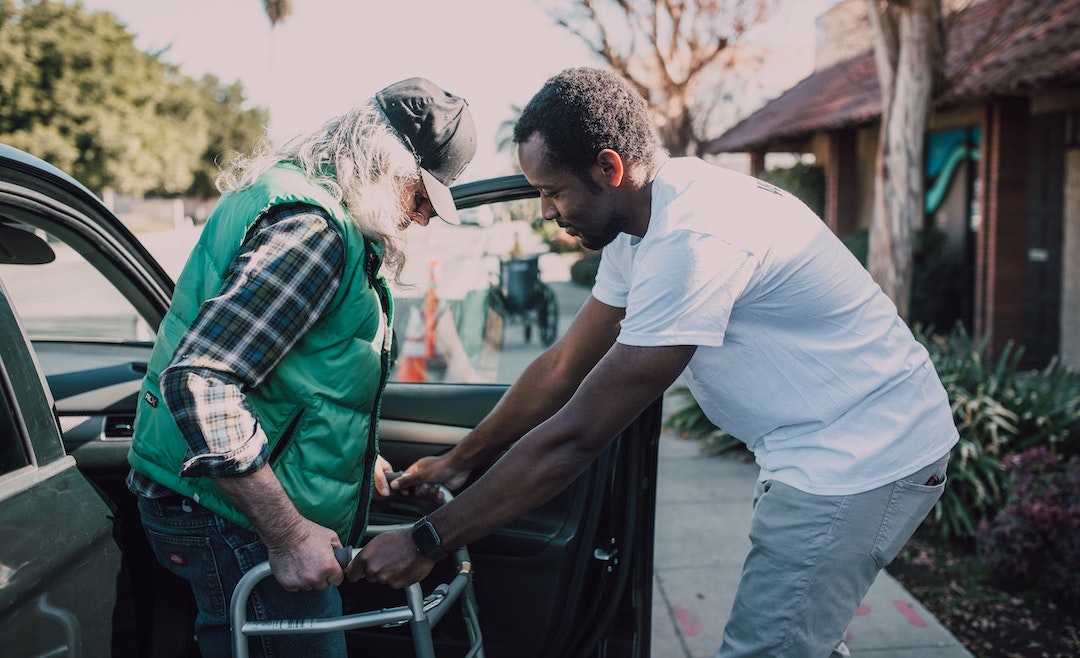
- Hospital volunteer. You may escort patients to different areas, assist at information desks, or support nursing units, gaining firsthand exposure to hospital operations and patient needs.
- Free clinic volunteer. You can help with intake, exam room turnover, or patient flow while seeing how care is delivered to uninsured or underserved populations.
- Hospice volunteer. You may provide companionship and emotional support to patients with serious illnesses and their families, which builds empathy and communication skills.
- Emergency department volunteer. You can greet patients and help them check in and provide comfort items like blankets and water while observing triage, teamwork, and fast-paced decision-making in an acute care setting.
- Health education programs. Teaching basic health topics in schools or community centers shows communication skills and public health awareness.
- Patient advocacy organizations. Supporting disease-specific nonprofits demonstrates commitment to vulnerable populations.
- Senior center volunteer. Assisting with activities or companionship builds interpersonal skills and cultural competence.
- Community food bank volunteer. Addressing food insecurity shows an awareness of the everyday conditions that shape people’s health.
- Red Cross volunteer. Involvement in disaster response or blood drives demonstrates adaptability and commitment to community service.
- Nursing home volunteer. Long-term involvement can deepen your understanding of aging, chronic illness, and long-term care.
- Research study volunteer coordinator. Assisting with recruitment and participant communication exposes you to clinical research processes.
How to Find Volunteer Hours as a Premed Student
Finding volunteer roles requires initiative and planning. Start early so you have time to build meaningful involvement.
- Contact local hospitals and clinics directly. Many healthcare systems have volunteer portals where you can apply, interview, and receive training for long-term placements.
- Check your college’s pre-health advising office. Pre-health advisors often maintain lists of vetted volunteer sites and can recommend roles that will strengthen your application.
- Use volunteer matching websites. Platforms such as idealist can help you find opportunities by interest, location, and time commitment.
- Reach out to community health organizations. Public health departments, nonprofit clinics, and community centers often need reliable volunteers.
- Ask professors, mentors, or upper-level students for referrals. Personal recommendations can help you secure roles that may not be widely advertised.
How Volunteering Can Help You Get Into Medical School
Volunteer work strengthens your application in ways that go beyond simply reaching a target number of hours.
- Confirms your passion for medicine. Sustained service shows that you have explored the field firsthand and understand what a career in healthcare involves.
- Demonstrates compassion and service-oriented values. Working with patients and communities highlights empathy, respect, and a genuine commitment to helping others.
- Provides meaningful patient experiences. Exposure to illness, recovery, and healthcare systems gives you concrete examples to discuss in essays and interviews.
- Strengthens your personal statement and interviews. Specific stories from service roles make your application more memorable and help clarify your long-term goals.
- Builds professionalism and communication skills. Consistent attendance, teamwork, and interacting with diverse patients demonstrate maturity and readiness for medical training.
- Leads to stronger letters of recommendation. Supervisors who observe your growth and work ethic over time can write detailed, persuasive letters about your character and commitment.
Tips for Choosing Volunteer Opportunities
Choosing the right volunteer role is about more than convenience. The best experiences are those that fit your personal story and allow you to grow.
Keep these principles in mind:
- Focus on long-term commitments. Staying in one role for a year or more demonstrates reliability and allows you to take on greater responsibility.
- Prioritize patient-facing roles when possible. Direct interaction strengthens your understanding of healthcare and better prepares you for interviews.
- Choose causes you genuinely care about. Authentic interest will make the experience more meaningful and easier to discuss later.
- Balance clinical and non-clinical service. A mix shows that you care about both patient care and broader community impact.
- Look for mentorship opportunities. Working closely with healthcare professionals can provide guidance and potential recommendation letters.
- Avoid short-term resume padding roles. Admissions committees value depth and reflection more than a long but shallow activity list.
- Seek leadership or coordination roles over time. Taking initiative demonstrates growth and maturity.
Other Tips for Volunteering as a Premed Student
Volunteer hours are only one piece of your overall application, and likely won’t help you get into med school if you have a low GPA, but strategic planning can help you build a balanced profile.
- Start early in college. Gradually building experiences over several years reduces stress and strengthens depth.
- Track your hours and reflections. Brief notes about meaningful moments will help when writing essays and preparing for interviews.
- Build relationships with supervisors. Strong connections lead to more personalized and persuasive letters of recommendation.
- Diversify your exposure. Experiencing different specialties or settings can help confirm your interests.
- Avoid overloading your schedule. Your GPA and MCAT remain critical, so don’t take on so much service that it impacts your academics negatively. You also need to leave room for extracurriculars that can also improve your med school application.
As you likely know, getting into med school is hard, but volunteer hours are a great way to improve your application and readiness for it.
There is no magic number of volunteer hours that guarantees acceptance to medical school. Aiming for 300 hours is a strong general guideline, but what matters most is sustained, meaningful service.
Start early, stay consistent, and choose opportunities that genuinely challenge and inspire you.


.svg)