Stepful's online program prepares you to become a certified radiologic technologist. After you complete your coursework and pass your certification exam, our team will work with you to secure clinical hours and a full-time job.
%202.svg)

%201.svg)




%201.svg)
Join the waitlist


.webp)
.webp)

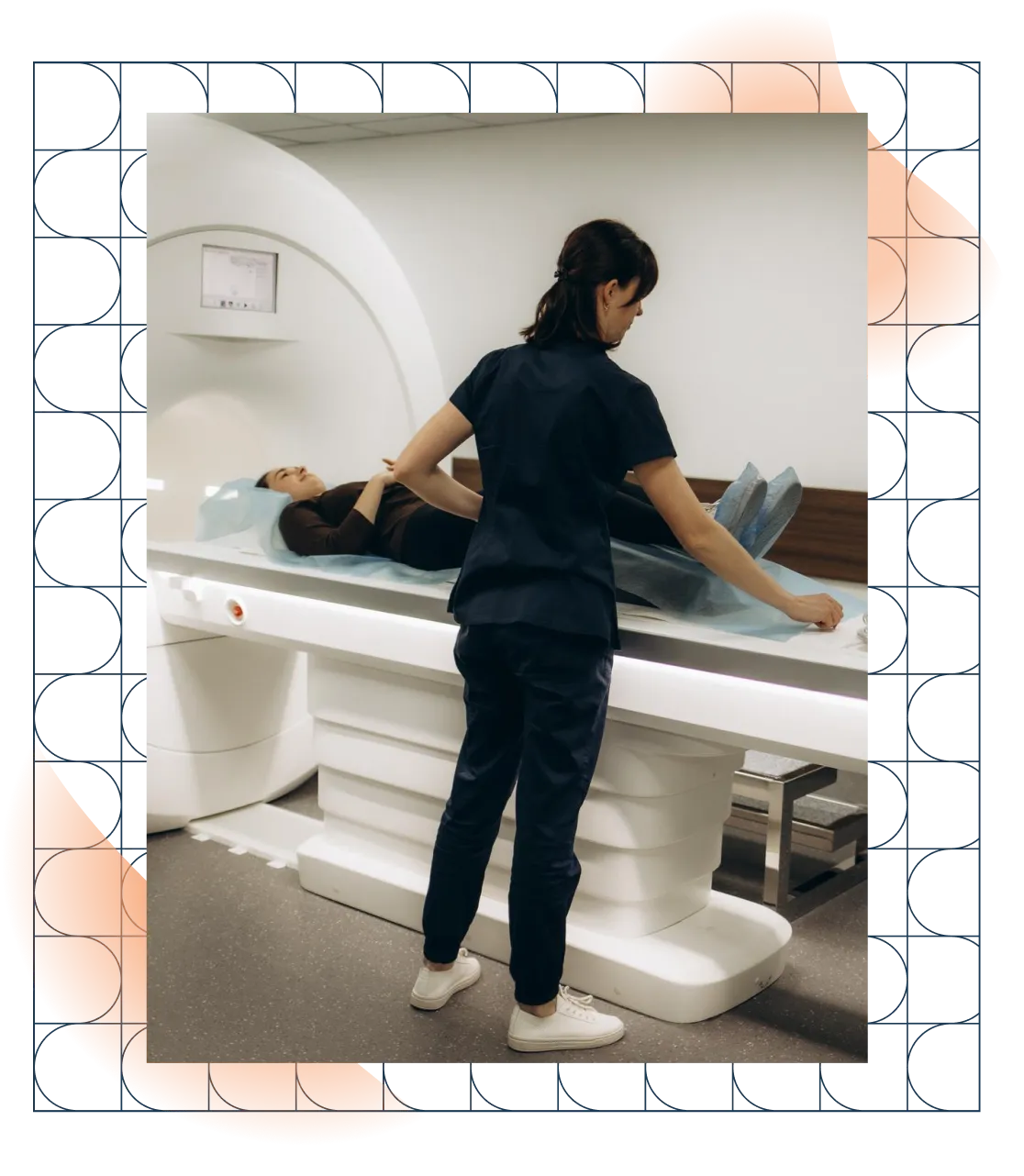
Radiologic technology is the healthcare field focused on diagnostic imaging. It uses X-rays, CT scans, MRI, fluoroscopy, and other techniques to create pictures of the inside of the body.
Radiologic technologists, also called radiographers, radiology techs, rad techs, or X-ray techs, are the trained professionals who operate this equipment. Physicians rely on these images to detect injuries, diagnose diseases, and guide treatment decisions.
Radiologic technologists work in many different healthcare settings. You'll find them in hospitals, outpatient imaging centers, physician offices, urgent care clinics, and trauma centers.
Many specialize in a particular imaging technology, such as computed tomography (CT scans) or magnetic resonance imaging (MRI scans), while others work in general radiology.
Diagnostic imaging is needed for nearly every major medical condition, from fractures and internal injuries to cancer, cardiac disease, and neurological disorders.
According to the U.S. Bureau of Labor Statistics, there are about 228,000 radiologic techs and more than 44,000 MRI techs currently employed in the U.S. The field is expected to grow between 5% to 7% in the next decade, faster than the average for other jobs in the US.

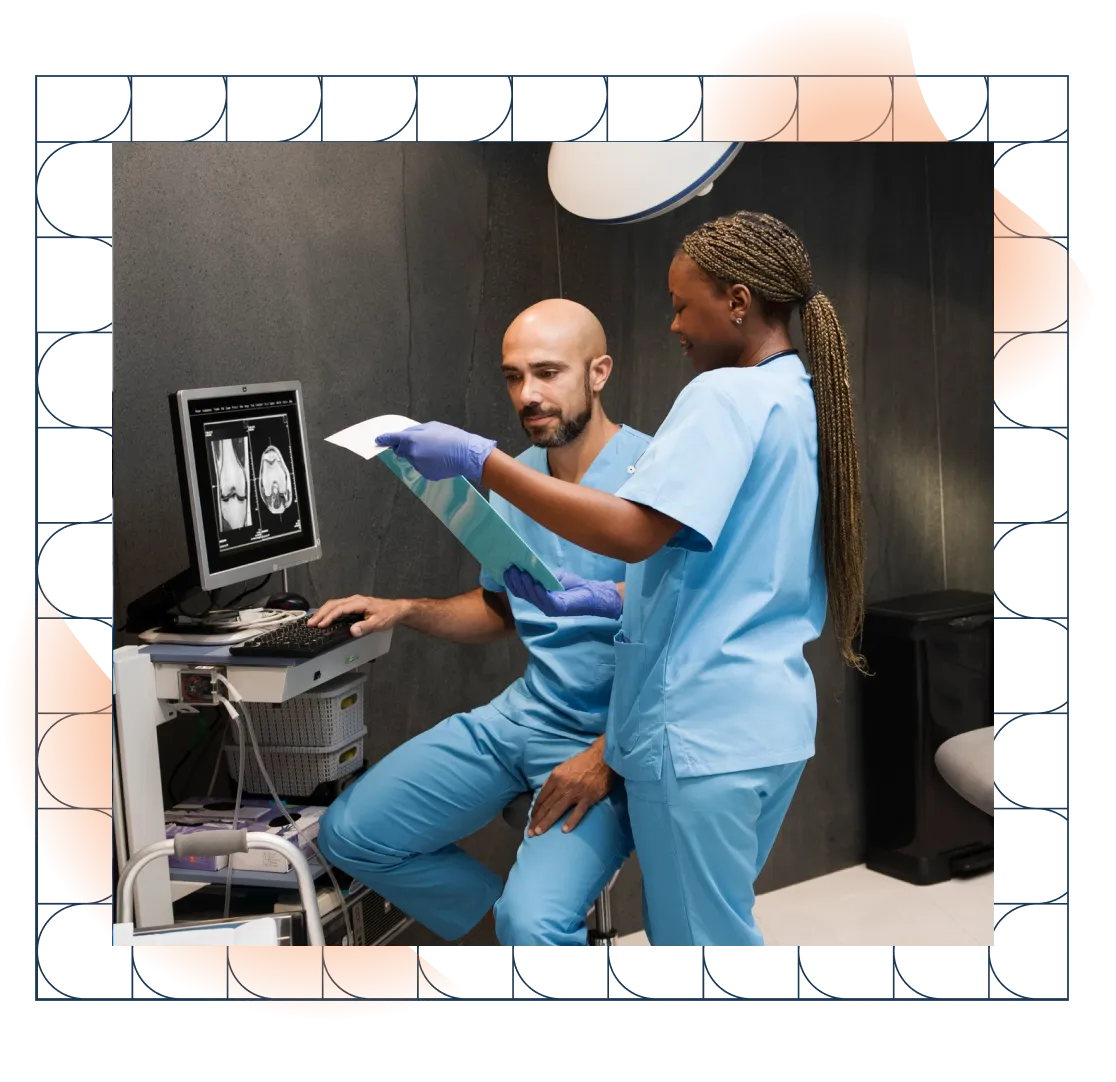
Rad techs are the healthcare professionals who perform the scans so that doctors, called radiologists, can interpret them. More than half of all rad techs work in hospitals, but they can also work in outpatient imaging centers, oncology clinics, or orthopedics practices. Their work is hands-on and patient-facing, but they collaborate closely with the doctors who order the tests to make sure they get what they need.
Key responsibilities include:
- Preparing patients for imaging procedures, including explaining the process, addressing concerns, and taking a brief medical history
- Positioning patients and adjusting imaging equipment to capture the correct views
- Operating radiology equipment safely and accurately
- Following precise physician orders on which areas of the body to image
- Applying radiation protection to minimize exposure for patients and staff
- Evaluating image quality and repeating scans when necessary
- Maintaining detailed records of imaging procedures
- Collaborating with physicians to ensure diagnostic goals are met
Rad techs can specialize in a specific type of scan, like mammography, cardiac imaging, or nuclear medicine, or focus on a particular area of medicine like oncology, orthopedics, or pediatrics.
Many start with general X-ray work as an X-ray technician, then pick up specialty credentials as they grow in their careers.
Salary
As of May 2024, the median annual salary for radiologic techs was $77,660. The top 10% earn more than $106,990. MRI technologists earn a higher median salary, making $88,180 per year, with top earners making more than $121,420.
Salaries vary by specialization, geographical location, and work setting, with hospitals and outpatient clinics paying more than doctors’ offices.
Job outlook
The BLS projects 5% job growth for radiologic technologists and 7% for MRI technologists from 2024 to 2034, faster than the average for other jobs in the U.S. They estimate that there will be an average of 15,400 job openings each year.
The BLS based its estimate of job growth on the fact that the US population is getting older, and older adults need more medical care, including more imaging.
Conditions like cancer and injuries from falls require X-rays, CT scans, and MRIs to diagnose and treat, and those cases are only expected to increase. That means a growing demand for rad techs who can perform the scans.
Career mobility
Entry-level certification in radiography is just a launchpad for many techs. Many technologists earn additional credentials in CT, MRI, or mammography as they gain experience, opening doors to higher-paying roles, greater specialization, and more career flexibility. The field rewards those who invest in their professional development.
Stepful's radiology technologist program is designed to help you build these skills, earn nationally recognized certification, and get job-ready in the field of diagnostic imaging.

For most radiologic technologists, earning professional credentials is required. The American Registry of Radiologic Technologists (ARRT) is the primary credentialing body for the field, with more than 300,000 registrants.
ARRT certification demonstrates to employers that a technologist has met rigorous education and competency standards and is qualified to practice safely.
ARRT offers three types of credentials. The first is a newer entry-level option that requires only a high school diploma or GED. It’s called Imaging Assistant (IA).
However, the primary credential for practicing rad techs is the Registered Technologist—RT(R). It requires completion of a JRCERT-accredited and ARRT-approved program and is the standard qualification most employers and state licensing boards require. This certification covers a wide range of imaging disciplines.
In addition to ARRT certification, most states require a separate state license to practice.
For those looking to advance, ARRT offers RT credentials in specialty disciplines like CT and MRI. These are among the most in-demand skills, with higher earning potential to match.
At the highest level, the Registered Radiologist Assistant (RRA) credential is available for experienced technologists who hold an RT in Radiography and a master's degree.
Once you begin working as a rad tech, you should also consider joining the American Society of Radiologic Technologists (ASRT), a professional membership organization for the field, representing over 156,000 radiologic technology professionals.

01
Heading
Lorem ipsum dolor sit amet, consectetur adipiscing elit, sed do eiusmod tempor incididunt ut labore et dolore magna aliqua. Ut enim ad minim veniam, quis nostrud exercitation ullamco laboris nisi ut aliquip ex ea commodo consequat. Duis aute irure dolor in reprehenderit in voluptate velit esse cillum dolore eu fugiat nulla pariatur.
02
Heading
Lorem ipsum dolor sit amet, consectetur adipiscing elit, sed do eiusmod tempor incididunt ut labore et dolore magna aliqua. Ut enim ad minim veniam, quis nostrud exercitation ullamco laboris nisi ut aliquip ex ea commodo consequat. Duis aute irure dolor in reprehenderit in voluptate velit esse cillum dolore eu fugiat nulla pariatur.
03
Heading
Lorem ipsum dolor sit amet, consectetur adipiscing elit, sed do eiusmod tempor incididunt ut labore et dolore magna aliqua. Ut enim ad minim veniam, quis nostrud exercitation ullamco laboris nisi ut aliquip ex ea commodo consequat. Duis aute irure dolor in reprehenderit in voluptate velit esse cillum dolore eu fugiat nulla pariatur.
04
Heading
Lorem ipsum dolor sit amet, consectetur adipiscing elit, sed do eiusmod tempor incididunt ut labore et dolore magna aliqua. Ut enim ad minim veniam, quis nostrud exercitation ullamco laboris nisi ut aliquip ex ea commodo consequat. Duis aute irure dolor in reprehenderit in voluptate velit esse cillum dolore eu fugiat nulla pariatur.
Radiologic technology training has two components. The first is academic coursework, and the second is hands-on clinical training. Both are equally important and required for certification.
The “classroom” portion of a radiologic technology program covers the theory and principles behind everything you'll do in the clinic.
Core subjects include anatomy and physiology, radiation physics, imaging procedures and techniques, patient care, radiographic pathology, and radiation protection.
This foundational coursework can be delivered online or in-person and prepares you for both your clinical placement and your certification exam.
Hands-on clinical training takes place in a real imaging facility, where you position actual patients, operate equipment, and develop clinical competency under the supervision of licensed professionals.
In-person clinical hours are a standard requirement for radiologic technology certification and cannot be achieved through simulation or online learning alone. This is the part of the training where classroom knowledge becomes clinical skill.
For many healthcare programs, the question of whether online training works is complicated. You need hospital access, clinical equipment, and in-person supervision.
Medical billing and coding is different.
This is already a desk-based, computer-driven career. The tools you use in training—EHR software, coding manuals, claim submission systems—are the same tools you'll use on the job. There's nothing lost by learning remotely, and a lot gained.
For students, the advantages are just as clear. Most people entering this field are career changers, working adults, or parents managing other responsibilities.
An online medical billing and coding course removes the commute, works around your schedule, and opens up a national job market from day one. Because when the job itself is frequently remote, you're not limited to employers in your city.
Many online programs in this field are self-paced and video-based. Stepful is different.
Our medical billing and coding program is 100% online but offers live, instructor-led classes twice a week. You get the flexibility of online learning with the structure and accountability of a real classroom.

Not all programs are alike, but the strongest ones share a consistent foundation. If you're evaluating radiology tech schools or online radiology tech programs, look for comprehensive coverage of these core topics:
- Medical terminology and healthcare systems
- Human anatomy and physiology
- Radiation physics and biology
- Radiographic imaging principles and exposure techniques
- Patient positioning for all major anatomical regions
- Radiation protection and safety protocols
- Imaging equipment operation and quality control
- Radiographic pathology recognition
- Patient care and communication
- ARRT exam preparation
- Clinical practicum / hands-on training hours

Live classes, not self-paced video
%202.svg)
Built-in job coaching
